
Road Contracts Worth N20b and Below To Be Awarded to Local Contractors Only
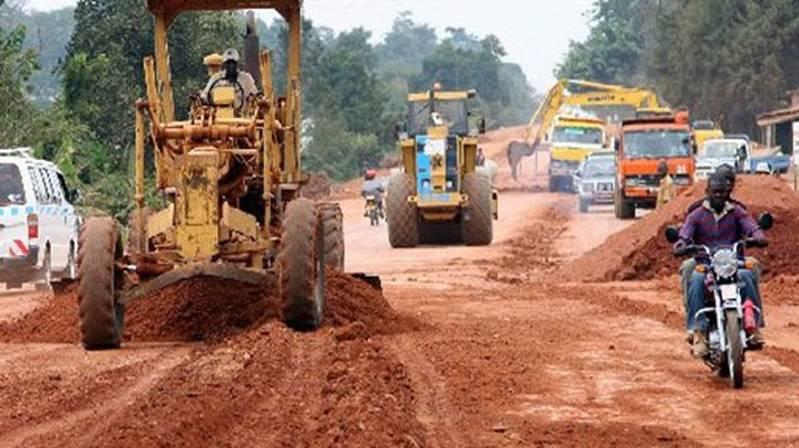
In September 2025, the government of Nigeria made a gigantic policy that aims at changing the landscape of road contracting in the country. On the heels of the Ministry of Works, any road contracts and road construction projects worth up to N20 billion and below will henceforth be exclusively dealt with by local contractors. This is done under the aegis of the overall “Nigeria First” policy, which was recently inaugurated by President Bola Tinubu to advance domestic production and aid local capacity under government procurement.
The policy does more than restrict expatriate firms—it represents a strategic turning point in how infrastructure contracts are procured and delivered. As inherited road projects funded by the Nigerian National Petroleum Company Limited (NNPCL) under the Tax Credit Scheme are to continue under a new funding prioritization framework, the presidency ordered that those below N20 billion be in the interest of local contractors. While direct funding by NNPCL was put on hold as of August 2025, the government was adamant that ongoing projects would not be dropped. Instead, such projects are now given priority, especially those along major economic routes such as the Eleme-Onne axis of the East-West Road.
Works Minister insists that in this way, a policy is meant to bring local firms to the same level but still have the capacity to bid for larger projects. Local contractors can no longer be left out of smaller but significant contracts. In doing so, the government seeks to stimulate local capacity, improve standards, and boost the domestic construction industry’s participation in national infrastructure projects. Expatriate firms, Umahi stated, will still have space to bid on projects worth over the N20 billion threshold.

Impacts on Local Contractors
The policy is a major chance for domestic construction firms. The majority of local contractors have traditionally complained about being excluded for foreigners even for work they believe they are capable of.
By reserving sub-N20 billion projects for the locals, the government gives them space to build reputations, scale up operations, hire more workers, and invest in upgraded equipment. In the long term, this can lead to increased domestic capability as well as a robust local construction sector. But the policy does not eradicate the difficulties. The local firms still need to live up to higher standards of workmanship and timely delivery.
The Minister Umahi warned that any individual who engages contracts under this new provision will be held accountable; failure in terms of quality, poor construction techniques, or failure to meet schedules could lead to sanctions, including deployment of anti-corruption agencies. Particularly, certain tendencies such as subjecting binder courses to the weather without incorporating wearing courses—a primary reason for premature road failure—will be prohibited.
In addition, the financial, technical, and logistical capacity of most small contractors will be strained.
Contracting with agreements worth up to N20 billion entails a lot of capital, machinery, procurement management, and managerial talent.
Ensuring that local firms are at par may entail government support, such as capacity building, regulation of funding, timely payment for satisfactorily completed work, and technical inspection.
The policy, in the process, creates an incentive for native builders to enhance their capabilities to bid for even more substantial contracts. The Whistler +1 Government and Policy Context This policy guideline draws on the “Nigeria First” policy program, whose objective is to place locally produced goods and services ahead of others in government purchasing in every location. President Tinubu’s directive is to encourage that government contracts, if at all possible, should first be awarded to Nigerian firms. The sub-N20 billion threshold for road contracts is a concrete expression of this principle.
Another factor is the project management under the NNPCL Tax Credit Scheme. There has been a prioritization system introduced for inherited projects by the Federal Government to guarantee the completion of erstwhile funded road works, especially along major national economic roads. Even though NNPCL suspended new funding under this scheme in August 2025, work on ongoing projects remains under the cover of the new framework, and steps are being taken to avoid abandonment.

Anticipated Benefits and Potential Risks
If properly implemented, the policy will very much bring many benefits. In the first place, the policy will probably increase local employment and boost Nigerian contractors’ technical skills. Secondly, indigenous engagement deepening may prevent capital flight, increase Nigerian supply chains, and stimulate investment in national infrastructure capabilities. Thirdly, as local firms perform contracts and build reputations, their ability to bid for bigger ones may increase, which will assist in increasing the size of the country’s construction industry.
But there are hazards that can render the policy goals meaningless. There is a danger of sub-standard delivery if local firms attempt to undertake projects with inadequate technical or financial readiness. Delays and cost overruns can damage public trust. There is also the danger of informal exclusion or favoritism if the criteria for choosing local firms are opaque or unevenly applied.
Also, local contractors face restrictions of limited access to funds, high prices of inputs, and volatile currency that can affect procurement of inputs. Without additional support from government or private sector collaborators, some of them may not be in a position to handle the new demands. Outlook and Recommendations For the policy to be successful, there are key steps that the government and all interested parties should take.
Firstly, good supervision and quality control systems must be part of the contract awards. The Ministry of Works must provide regular monitoring of construction procedure, materials, and time. Secondly, the capacity building program should be stepped up to prepare indigenous contractors to meet the specified standards. Project management training, financial management training, machinery maintenance training, and engineering practice training would be particularly important.
Third, finance availability must be improved in local firms so that they can mobilize funds, purchase inputs, and execute work without unreasonable restrictions. Incentives such as preferential lending, advance payment, or guarantee for performance can help. Fourth, competitive open bidding even among locals must be assured so that monopoly or corruption does not occur. Fifth, prompt payment against milestones achieved is necessary; delay in payments can destroy the operations of smaller companies. Lastly, the policy must be tested continuously, with feedback mechanisms allowing it to be made more effective. Learning from pilot experiments—along the East-West Road, for instance—and extending those successes will hone the strategy.
Nigeria’s decision to reserve contracts for roads of value less than N20 billion for local contractors reflects a laudable determination toward domestic capacity, level playing field competition, and sustainable infrastructure industry development. If correctly implemented, monitored, and supported, this policy can be a game-changer in the mode of road construction across the country, to the benefit of local firms, workers, and the economy as a whole.