IMF raises Nigeria’s real GDP growth forecast to 3.9% for 2025 and 4.2% for 2026
In the October 2025 edition of its World Economic Outlook, the International Monetary Fund (IMF) delivered a significantly brighter assessment of the country’s near-term prospects, lifting Nigeria’s real GDP growth forecast to 3.9% for 2025 and 4.2% for 2026. These new estimates mark substantial upgrades of 0.5 percentage point for 2025 and a full 1.0 percentage point for 2026 compared with the Fund’s July 2025 projections of 3.4% and 3.2%, respectively.
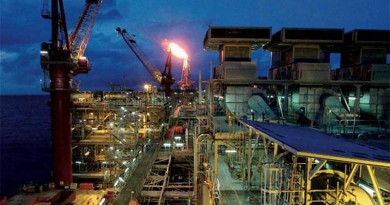
The more optimistic outlook stems from several favourable developments. Higher-than-expected crude oil output, driven by improved security in the Niger Delta and better operational efficiency among producers, has provided a critical boost to export earnings and government revenue. At the same time, investor sentiment has strengthened noticeably, supported by clearer policy direction, gradual exchange-rate unification, and a more predictable monetary environment. The IMF also highlighted Nigeria’s relatively insulated position from escalating global trade tensions, particularly the recent wave of U.S. tariff measures, as the country’s merchandise exports to the United States remain modest and largely commodity-based.

Growth Trajectory For Sub-Saharan Africa
Regionally, the growth trajectory for Sub-Saharan Africa as a whole appears more restrained. The IMF left its 2025 forecast unchanged at 4.1%, with only a modest 0.3 percentage point upward adjustment to 4.4% for 2026. While aggregate conditions remain stable, the Fund cautioned that downside risks continue to dominate the regional outlook, including tighter global financial conditions, climate shocks, and lingering geopolitical fragmentation.
For Nigeria specifically, the upgraded forecasts signal a welcome consolidation of macroeconomic stability after several turbulent years. However, the economy’s persistent heavy dependence on hydrocarbon receipts—still accounting for the lion’s share of export earnings and fiscal revenue—leaves it acutely exposed to volatile oil prices, OPEC+ production quotas, and potential domestic disruptions.
Lasting Prosperity
To transform these cyclical gains into lasting prosperity, policymakers face an urgent diversification imperative. Sustained public and private investment must flow into high-potential non-oil sectors, particularly modernised agriculture, labour-intensive manufacturing, digital services, and tourism. Creating an enabling environment will require more than funding alone: far-reaching structural reforms are needed to strengthen governance, enhance transparency in public procurement and revenue management, eliminate policy flip-flops that deter long-term investors, and establish clear, predictable regulatory frameworks across key industries.
Only by decisively reducing the economy’s oil-centric character and building broader, more resilient growth drivers can Nigeria shield itself from external shocks and place its development trajectory on a truly sustainable path in the years ahead.