Nigeria Successfully Raise $2.35Billion In An Oversubscribed Eurobond Issue
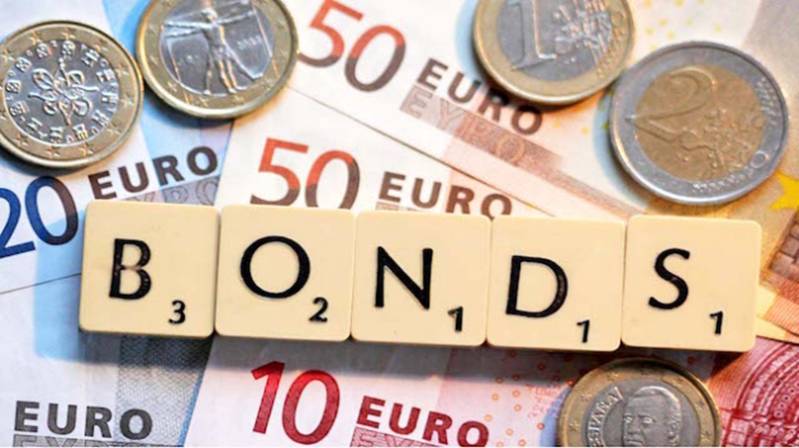
This is a strong vote of confidence in President Bola Ahmed Tinubu’s economic reforms: Nigeria has successfully raised $2.35 billion in dual-tranche Eurobonds, attracting an unprecedented peak orderbook in excess of $13 billion-the largest ever for the country. This represents a staggering 477% oversubscription, which will enable the West African nation to surpass its initial target of around $2.25-2.3 billion despite recent threats from U.S. President Donald Trump to mount military action due to allegations of religious persecutions.
The DMO announced the landmark transaction on November 5, 2025, marking Nigeria’s first Eurobond issuance since December 2024 and its strongest return to the international capital markets in years. The offering was comprised of a $1.25 billion 10-year tranche maturing in 2036, priced at a yield of 8.625-8.6308%, and a $1.10 billion 20-year tranche maturing in 2046 at 9.125-9.1297%. These yields came in tighter than initial guidance and were meaningfully below the 10.375% on the prior 10-year bond issued in December 2024, reflective of improved borrowing costs amidst global rate cuts and emerging market appetite.
The Notes are expected to settle on 13 November 2025 and will be listed on the London Stock Exchange, FMDQ Securities Exchange, and Nigerian Exchange Limited. Joint bookrunners were Chapel Hill Denham, Citi, Goldman Sachs, JPMorgan, and Standard Chartered, while FSDH Merchant Bank was financial adviser.
Proceeds and Strategic Objectives
The funds will mainly repay a $1.118 billion Eurobond due on November 21, 2025, issued in 2018 at 7.625%, while addressing part of the 2025 budget deficit and increasing external reserves currently standing at about $43 billion. DMO Director-General Patience Oniha referred to this issuance as “a major achievement” and stressed its contribution to diversifying funding sources and providing long-term growth in support of President Tinubu’s agenda.
Finance Minister Wale Edun, while supporting the transaction, said it was in line with efforts to reduce pressures on domestic borrowing and in the best interest of debt management. President Tinubu hailed the oversubscription as evidence of “strong investor confidence” despite “political headwinds,” promising continued diplomatic engagement with international partners.

Defying Geopolitical Risks
The sale went through without a hitch, even after Trump’s weekend threats of military intervention if Nigeria failed to address alleged killings of Christians, which briefly saw existing bond prices dip by about 0.5 cents. Markets quickly adjusted as analysts said investors favored hard-nosed reforms-e.g., fuel subsidy removal and naira flotation-by Nigeria over short-term rhetoric from the US. Demand came from fund managers, pension funds, hedge funds, and banks from the UK, North America, Europe, Asia, the Middle East, and Nigeria itself.
This joins a wave of African issuances, with Congo Republic, Kenya, and Angola also tapping markets recently amid narrowing spreads. African sovereign debt trades at 367 basis points over U.S. Treasuries.
Analyst Perspectives and Challenges Ahead
The over-subscription shows that Tinubu’s reforms are painful but necessary; the recent upgrades from Moody’s and Fitch have further helped sentiment. Critics have voiced concern over rising debt burdens: Nigeria’s total public debt stands at NGN152 trillion, and the external component could rise above the DMO’s 45% target currently at 47.1% as of June 2025. Yields remain high compared to concessional loans; sustainability remains dependent on revenue growth with volatility in oil and inflation.
On X, the reactions were mixed: there was praise for the “securing the bag” moment, while there was concern over borrowing without structural changes. Analysts such as CSL Research project a wider deficit for 2025 at 4.2 percent of GDP, urging careful management to avert rollover risks.
At a time when Nigeria is targeting a $1 trillion economy by 2030, this Eurobond triumph underlines resilience but underscores fiscal prudence. With reserves projected at $45 billion by the end of this year, the Giant of Africa continues to navigate the global waters with fresh vigor.