Now Safe drinking water coming for 1.7m people in Nigeria, Chad and Somalia
The International Rescue Committee (IRC) has unveiled a new initiative designed to provide clean and safe drinking water to vulnerable communities in Nigeria, Chad, and Somalia. This groundbreaking project, launched in partnership with GiveWell, will deploy in-line chlorination (ILC) technology to deliver safe drinking water on a large scale across some of the world’s most fragile humanitarian regions.
In areas affected by conflict, displacement, and climate change, access to safe water remains a critical challenge. Clean water is essential not only for survival but also for nutrition, hygiene, and the overall stability of health systems. Yet millions of displaced people and host communities still depend on unsafe or untreated water sources, especially as rising temperatures and erratic weather patterns intensify droughts, floods, and waterborne disease outbreaks.
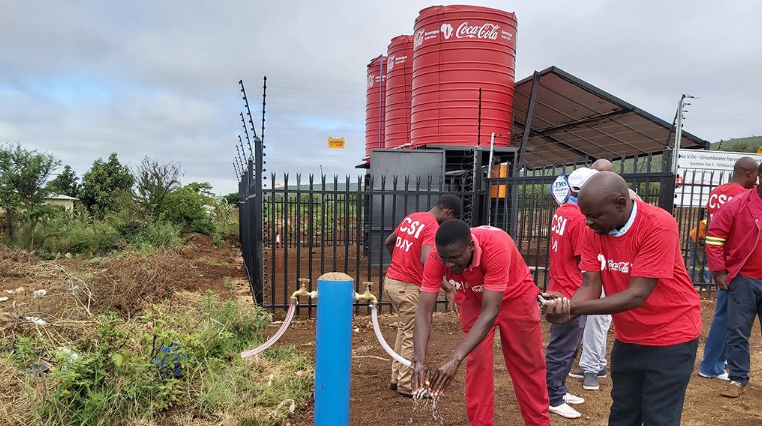
According to the World Health Organization (WHO), improving access to safely managed water, sanitation, and hygiene (WASH) services could prevent up to 1.4 million deaths annually. The IRC–GiveWell partnership seeks to address this gap by delivering safe water to approximately 1.75 million people. The project will install ILC devices across 7 refugee camps in Chad, 93 communities in Nigeria, and 50 communities in Somalia—bringing scalable, reliable, and safe drinking water to people in dire need.
Spanning 18 months, this pilot project will introduce an innovative, cost-efficient method of water purification within refugee settlements and vulnerable host communities. Unlike manual chlorination, in-line chlorination automatically dispenses chlorine into water as it flows, ensuring consistent treatment at the source. This low-tech approach minimizes the daily effort required by households, promotes consistent use, and can be expanded to serve entire communities or even small municipalities.

David Miliband, President and CEO of the IRC, emphasized the transformative potential of this initiative:
“Water chlorination remains one of the most effective and evidence-based WASH interventions. It significantly reduces diarrheal diseases, prevents outbreaks like cholera, and protects children from cycles of illness and malnutrition. Through our partnership with GiveWell, we aim not only to deliver safe water to those enduring the harshest humanitarian conditions but also to demonstrate a cost-effective model that can be replicated and scaled across the humanitarian sector.”
For decades, the IRC has supported crisis-affected populations with essential WASH services, working closely with local communities and partners. This project will further strengthen local water systems by integrating water quality monitoring and cost-effectiveness assessments, helping local actors identify the most efficient pathways for long-term, sustainable chlorination practices.
Elie Hassenfeld, Co-Founder and CEO of GiveWell, noted the project’s broader value:
“Beyond providing safe water to nearly 1.7 million people, this program will generate vital insights into the implementation of large-scale, cost-effective chlorination in humanitarian contexts. The evidence gathered will inform our future grantmaking and enhance the impact of our work for years to come.”
This collaboration builds on GiveWell’s previous support for IRC-led initiatives aimed at improving access to malnutrition treatment across five countries. Together, both organizations are reaffirming their commitment to evidence-based, cost-effective humanitarian interventions that maximize every donor dollar.
As climate change increasingly drives water scarcity and health crises, the IRC–GiveWell partnership highlights a critical truth: the climate crisis is also a water crisis. This pilot stands as a model for how consistent chlorination can strengthen community resilience, safeguard health, and offer a scalable, climate-resilient WASH solution for the world’s most vulnerable populations.