Oando grows profit 267% to N220 billion
Oando PLC (www.OandoPLC.com), recognized as Africa’s foremost integrated energy company and listed on both the Nigerian Exchange Group (NGX) and Johannesburg Stock Exchange (JSE), has announced impressive Audited Full Year (FY) 2024 financial results, showcasing a 44% rise in revenue to N4.1 trillion, up from N2.9 trillion in FY 2023.
In the upstream sector, Oando experienced a 3% increase in production, reaching 23,727 boepd. This figure includes a 27% rise in crude oil production to 7,558 bopd, while NGL production and gas output saw declines of 35% to 156 bpd and 5% to 16,013 boepd, respectively. The company’s 2P reserves surged by 95% year-on-year to 983 MMboe (2023: 505 MMboe), reflecting a reserves replacement ratio of 188% and highlighting the robustness of the company’s upstream portfolio following the acquisition. Additionally, Oando reported a consistent operational uptime of 86%, which enhances off-take reliability and minimizes deferred production.
In a similar vein, other local companies have also demonstrated notable revenue growth in light of the recent divestments by International Oil Companies. Seplat achieved a revenue of ₦1.65 trillion, marking a 137% increase from 2023, while Aradel reported ₦581.2 billion in revenue, a 162% rise compared to the previous year.
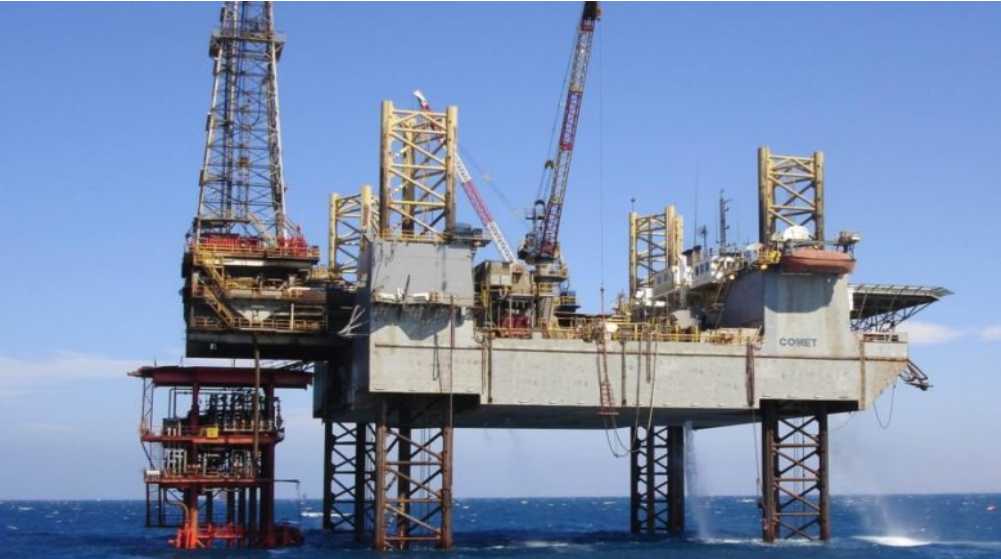
Commenting on the company’s upstream performance, Wale Tinubu, Group Chief Executive of Oando PLC, stated, “2024 was a pivotal year for Oando, with the successful acquisition and integration of NAOC representing the culmination of a decade-long strategic growth journey that has significantly enhanced our upstream portfolio. This has led to our assumption of operatorship of the OML 60–63 series and an increase in our working interest in these assets from 20% to 40%, as well as an expansion of our 2P reserves from 500 million barrels of oil equivalent to 1 billion barrels.
In the downstream sector, Oando’s trading subsidiary announced that it sold 20.7 million barrels of crude oil in 2024, marking a 37% decrease from 2023 due to structural changes within the Nigerian oil market. Furthermore, the volumes of refined products saw a decline of 64%, totaling just over 599 kMT, attributed to weakened domestic demand stemming from the challenging macroeconomic conditions in the country.
Forecasts for global oil prices and demand in 2025 remain ambiguous due to ongoing macroeconomic and trade policy uncertainties. JP Morgan estimates that Brent crude will peak at $66 per barrel in 2025 and $58 per barrel in 2026, while the U.S. Energy Information Administration (EIA) anticipates a drop in Brent crude oil prices from an average of $81 per barrel in 2024 to $74 per barrel in 2025 and $66 per barrel in 2026, citing an increase in global production alongside slower growth in global demand.
In its renewable energy division, the company has made significant strides in advancing its clean energy agenda, achieving measurable progress across various sectors. By the conclusion of 2024, the electric mass transit program had covered 121,145 kilometers, transported over 205,000 passengers, displaced 163,546 kilograms of CO₂ emissions, and saved more than 60,000 liters of diesel.
Other significant accomplishments include the signing of Memoranda of Understanding for wind projects with Cross River and Edo State, as well as the initiation of a geothermal feasibility study in partnership with NNPC, aimed at exploring the conversion of mature wells into renewable power assets.
As the company continues to integrate its expanded portfolio following its latest strategic acquisition, current projections indicate that it has entered 2025 with robust momentum and clear ambitions. Tinubu stated, ‘Looking ahead, 2025 will be our year of execution. Our primary objectives will include unlocking synergies from the acquisition, addressing above-ground security risks through the implementation of a revamped security framework designed to mitigate the ongoing theft of oil, optimizing costs, restructuring the balance sheet, enhancing operational efficiency, and leveraging technology to boost productivity.
In our efforts to increase production in order to meet our goal of 100,000 barrels of oil per day (bopd) and 1.5 trillion cubic feet (tcf) of gas by 2029, we will adopt a dual-track strategy involving rig-less interventions and well workovers, alongside an assertive drilling program. We are enthusiastic about the prospects that lie ahead and remain dedicated to providing improved returns for our shareholders, fostering shared prosperity, and sustaining our status as a prominent entity in Africa’s dynamic energy sector.
The published audited results for the fiscal year 2024 also reflect approximately four months of contributions from the Nigerian Agip Oil Company (NAOC), following the successful acquisition completed on August 22, 2024. Subsequently, the company has established a production forecast of 30,000 to 40,000 barrels of oil equivalent per day (boepd) for its 2025 outlook. This is in line with its post-acquisition optimization strategies aimed at maximizing portfolio value and supports its four-year objective of achieving 100,000 barrels per day.
It is clear that local entities, especially those that have transitioned to operators following the recent divestments by International Oil Companies (IOCs), are increasingly well-equipped to shape the future of the Nigerian energy industry. These indigenous firms possess valuable insights and contextual expertise that allow them to manage onshore and shallow water assets more effectively. This transition is anticipated to create a ripple effect throughout the economy by boosting local employment, enhancing capacity development, and increasing government revenue through taxes retained within the nation, revenue that was previously sent back to the home countries of the IOCs.