Refinery boom in Nigeria as FGN issues 23 new refinery licenses
In a landmark development for Nigeria’s energy sector, the Federal Government of Nigeria (FGN), through the Nigerian Midstream and Downstream Petroleum Regulatory Authority (NMDPRA), has issued 23 Licenses to Establish (LTEs) for new refineries (23 new refinery licenses) since the enactment of the Petroleum Industry Act (PIA) in 2021. This initiative, spanning four years as of November 2025, is poised to add over 850,000 barrels per stream day (bpsd) to the nation’s refining capacity, elevating the total from the current 1,125,000 bpsd to approximately 1.975 million bpsd once operational. The move addresses Nigeria’s chronic dependence on imported refined petroleum products, which has cost the economy billions annually, while fostering local content, job creation, and energy security.
Announced at the maiden conference of the Energy Correspondents Association of Nigeria (ECAN) in Abuja on November 13-14, 2025, this progress underscores the PIA’s transformative impact on the midstream and downstream sectors. However, challenges such as crude oil supply constraints, funding hurdles, and regulatory enforcement remain. This report examines the background, details of the licenses, implications, and future outlook, drawing on official disclosures and industry analyses.
Background to the new refinery licenses
Nigeria, Africa’s largest oil producer with over 1.4 million barrels per day (bpd) of crude output, has long grappled with a paradox: exporting raw crude while importing 90-100% of its refined products like Premium Motor Spirit (PMS), diesel, and kerosene. This inefficiency, exacerbated by underperforming state-owned refineries (Port Harcourt, Warri, and Kaduna), led to annual import bills exceeding $20 billion and recurrent fuel scarcity crises.
The Petroleum Industry Act (PIA), signed into law on August 16, 2021, marked a pivotal reform by unbundling the Nigerian National Petroleum Corporation (NNPC) and establishing the NMDPRA to regulate midstream and downstream operations. The Act liberalized the sector, offering incentives like tax holidays, pioneer status, and streamlined licensing to attract private investment. Under the PIA, licenses are categorized as:
- License to Establish (LTE): Initial approval for project planning and feasibility.
- License to Construct (LTC): Permission to build, requiring environmental and safety compliance.
- License to Operate (LTO): Full operational clearance post-commissioning.
The 23 LTEs represent a cumulative achievement from 2021 to 2025, reflecting accelerated private sector participation. As NMDPRA CEO Farouk Ahmed noted at the ECAN conference, these licenses align with broader reforms, including doubled crude supply to domestic refineries (from 20,000 bpd in 2023 to over 40,000 bpd in 2025) and the launch of Nigeria’s first gas trading exchange in May 2025.
Details of the 23 new Refinery Licenses
While a comprehensive public list of all 23 recipients remains undisclosed in official NMDPRA statements as of November 17, 2025, the licenses encompass a mix of large-scale conventional refineries and smaller modular units, primarily in the Niger Delta and southern states. The total proposed capacity exceeds 850,000 bpsd, focusing on processing local crude to produce PMS, Automotive Gas Oil (AGO), and petrochemicals.

Key Highlights and Known Projects
Based on NMDPRA disclosures and related announcements, the licenses include:
| License Type | Number Issued (Cumulative) | Proposed Capacity (bpsd) | Notable Examples |
|---|---|---|---|
| LTE | 23 | 850,000+ | Dangote Refinery expansion phases; modular units in Edo, Delta, Abia |
| LTC | 7-30 (across broader licenses) | 1.23 million (total reported) | Eghudu Refinery (100,000 bpsd, Edo); MB Refinery (30,000 bpsd, Delta); HIS Refining (10,000 bpsd, Abia) |
| LTO | 4 | 27,000 | Waltersmith (5,000 bpsd); Aradel (11,000 bpsd); OPAC (10,000 bpsd); Duport (2,500 bpsd) |
- Modular Refineries: These smaller, prefabricated units (1,000-30,000 bpsd) dominate, with 14 operational or licensed by mid-2025. They offer quicker deployment (6-18 months) and lower costs ($10-50 million vs. $1-5 billion for mega-refineries), ideal for remote fields. Examples include:
- Eghudu Refinery Ltd. (Edo State): 100,000 bpsd LTC issued March 2025.
- MB Refinery and Petrochemicals Co. Ltd. (Delta State): 30,000 bpsd LTE/LTC.
- HIS Refining and Petrochemical Co. Ltd. (Abia State): 10,000 bpsd LTE.
- MRO Energy Ltd. (Delta State): 10,000 bpsd, bringing modular total to 14.
- Larger-Scale Projects: Include expansions tied to the 23 LTEs, such as:
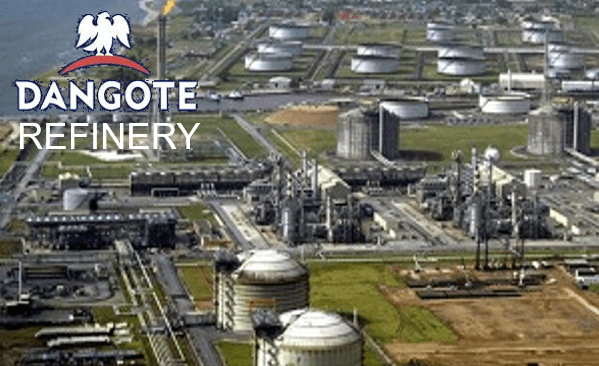
- Dangote Petroleum Refinery (Lagos): 650,000 bpsd, fully operational since September 2024 for PMS; integral to the licensing wave.
- AIPCC Energy (30,000 bpsd) and Waltersmith Train 2 (5,000 bpsd), both in commissioning.
- Azikel Petroleum (Bayelsa): 12,000 bpsd, expected online in 2025.
- BUA Refinery (Akwa Ibom): Under development.
The licenses emphasize local content, with indigenous firms like Waltersmith and Aradel leading modular builds. Geographically, over 70% are in oil-rich states (Delta, Bayelsa, Rivers, Edo), reducing logistics costs.
Issuance Timeline
- 2021-2022: Initial 9 LTEs post-PIA, focusing on modulars.
- 2023: 7 LTCs amid PIA implementation.
- 2024: 4 LTOs; Dangote’s ramp-up.
- 2025: Additional 3-5 LTEs/LTCs (e.g., March issuances in Edo/Delta/Abia), reaching 23 total LTEs.
The regulatory framework under which these new refineries are to be operated is the Nigerian Midstream and Downstream Petroleum Regulatory Authority, as stipulated in Sections 108-113 of the Petroleum Industry Act. Applicants shall demonstrate financial capability, technical competence, completion of environmental impact assessments, and meaningful engagement with host communities. The journey to licensing with the Authority begins by submitting detailed feasibility studies and business plans. This will follow the necessary technical audits, site inspections, and a public hearing. Following satisfactory review, the NMDPRA issues a License to Establish valid for one to two years, while further developing into a License to Construct and later a License to Operate if all the construction and safety milestones are met. Continuous monitoring is enforced through mandatory annual compliance reports, and failure to make progress may lead to revocation, again as shown when 32 inactive licenses were canceled in 2021. To further encourage investment, the government offers attractive incentives such as five- to seven-year tax holidays and access to the Midstream and Downstream Gas Infrastructure Fund, which has already disbursed several billions of naira for projects such as the expansion of Waltersmith Refinery. The DCSO law, enforced through the Nigerian Upstream Petroleum Regulatory Commission, legally mandates a minimum of 20% supply of produced crude to local refineries.
These 23 licenses have very wide-ranging economic and strategic implications. Nigeria’s total refining capacity would rise from 1.125 million barrels per stream day to almost 2 million, and position the nation to become a net exporter of refined products by 2030. Domestic supply of petrol had jumped from 1.3 billion litres in 2024 to 3.8 billion litres in 2025, while fuel imports had plunged 67% – down from 44.6 million litres per day in August 2024 to just 14.7 million litres per day by April 2025 – saving an estimated $10-15 billion annually in foreign exchange. The incipient refining industry is creating over 50,000 direct jobs and is expected to add 2-3% to GDP through the expanded downstream value chain. Energy security had improved dramatically, with strategic stockpiles now supplying 12 to 48 days and putting to an end the chronic fuel queues of yore. Lagos is also emerging as West Africa’s emerging pricing reference point for petroleum products after the May 2025 conference hosted with Platts S&P Global.

Against such a background of progress, many significant challenges remain. Most refiners continue to receive little or no crude under the Domestic Crude Supply Obligation, as international oil companies remain keen to export. Nine operational refineries alone would need 770,500 barrels per day in the first half of 2025, but this allocation is inconsistent; funding difficulties, partly due to volatile naira and high interest rates, have meant that only five of the 23 licensed projects have broken ground. Concern about potential market dominance by the Dangote Refinery, whose output constitutes over 50% of national capacity, remains tempered by the sheer number of licensed competitors, now more than 26 in all. More modular refineries are sited in areas of particular ecological sensitivity, where more severe enforcement of impact assessments will be required.
Looking ahead to the PIA’s fourth anniversary in 2025, the NMDPRA has set ambitious targets of 3 million barrels per day of crude production and 10 billion standard cubic feet per day of gas utilisation by 2030. Other milestones expected along the way include the commissioning of the Azikel and BUA refineries in 2026, full integration of the Dangote facility, widespread scaling of modular units, and increased MDGIF funding for more than 10 gas pipeline projects spanning 692 kilometres. Potentially unlocking up to $50 billion of new investment, the new naira-for-crude sales initiative launched in October 2024 could be transformative, coupled with sustained reforms. The resolution of crude allocation disputes, however, remains the single most important factor: without reliable feedstock, even the best-designed projects risk stalling.
In short, these 23 refinery licenses issued constitute the clearest expression of the Federal Government’s vision for a self-sufficient energy sector. Nigeria is steadily moving from being an import-dependent crude exporter to a genuine refining powerhouse. Though there are still some obstacles with regard to implementation, the visible momentum—doubled domestic crude supplies, sharply reduced imports, and rising local production—is certainly transformative. Full realization of the added 850,000 barrels per day capacity and translating it into lasting, inclusive growth for Africa’s largest oil producer will require prioritization of fair crude access and strict enforcement of regulations.