
Why Headline Inflation is on a downward trajectory for the 7th month
Headline inflation is on a downward trajectory for the seventh consecutive month, moderating to 16.05% y/y in September, a
197bps decline from 18.02% in the prior month. Meanwhile on a month-on-month basis, headline inflation edged up by 21bps to
0.93% from 0.72% in September, reversing the previous two months of consecutive deceleration. The uptick was primarily driven
by sticky core inflation amid a rebound in food prices growth, which tempered the monthly disinflationary momentum.
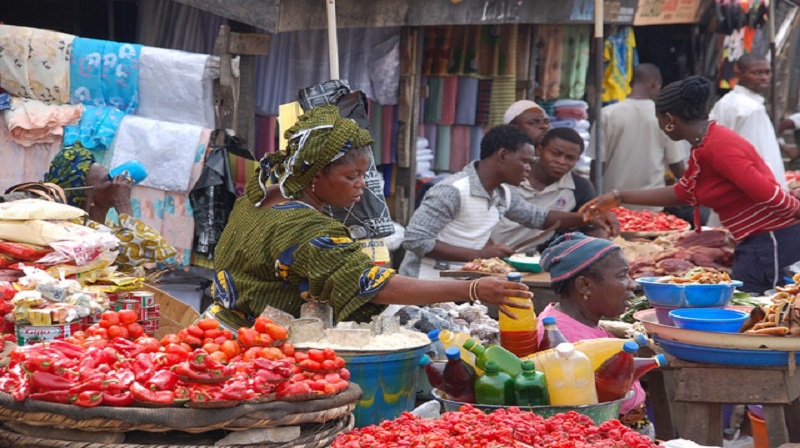
Food Inflation
Food inflation slowed by 375bps to 13.12% y/y from 16.87% y/y in September. Meanwhile it inched up by 121bps on m/m basis to
-0.37% from -1.57% in the previous month, reflecting waning gains from the seasonal harvest period. This was largely driven by the
rate of increase in the average prices of Onions (Fresh), Fruits (Oranges, Pineapple), Shrimp, Groundnuts (Unshelled), Vegetables
(Ugu, Okazi leaf), and Meat (Goat meat, Cow tail, Liver), amongst others. Additionally, imported food inflation stood at 0.35% vs
3.38% in September, largely supported by reduced pass-through from import costs on the back of 3.77% m/m appreciation in the
exchange rate to ₦1,421.73/US$1 in October.
Core Inflation
Core inflation eased to 18.69 y/y (-84bps from 19.53% in September). However, on a m/m basis, core inflation remained sticky at
1.42% m/m, showing 0.12bps decrease from the previous month. The muted monthly outcome reflects a mixed inflation outcome
across the core components. Upward pressure persisted in several categories, including housing, water, electricity, gas and other
fuels (2.86% vs 1.46%), transport (2.92% vs 0.90%), restaurant and accommodation services (2.10% vs 0.09%), services (1.52% vs
1.17%), ICT (0.54% vs 0.45%) and insurance and financial services (1.71% vs 0.91%).
These increases were partially offset by declines across selected goods and services such as furnishings, household equipment and
routine household maintenance (0.91 vs 3.53%), clothing and footwear (0.38% vs. 0.57%), health (0.57% vs 1.84%), education
(0.78% vs 2.67%), and recreation, sport and culture (0.80% vs 1.06%). Overall, the balance of pressures underscores a continued
sticky core inflation environment, despite the y/y moderation.
Regional Inflation Dynamics
The Urban inflation rate stood at 15.65% on a year-on-year basis, while the month-on-month rate was 1.14%.
For the Rural sector, the inflation rate in October 2025 was 15.86% year-on-year, with a month-on-month rate of 0.45%. At the
sub-national level, Adamawa (20.14%), Nasarawa (18.97%), and Zamfara (18.81%) recorded the highest headline inflation rates in
October, indicating stronger price pressures. These elevated rates may be attributed to insecurity being experienced across many
areas in the North of Nigeria, which has disrupted food production and increased the prices of various items. Conversely, Bauchi
(9.99%), Anambra (11.72%), and Gombe (11.73%) recorded the lowest headline inflation rates. On a month-on-month basis, Niger
(4.90%), Anambra (4.90%), and Enugu (4.75%) experienced the highest increases in inflation, while Edo (4.00%), Katsina (3.26%), and
Adamawa (3.10%) recorded the slowest increases.
Policy Outlook- MPC to Retain Restrictive Stance in the Near-Term
We expect the Monetary Policy Committee (MPC) to maintain a cautious and restrictive policy stance at their upcoming meeting on
24th and 25th of November 2025. The Committee is likely to await clear evidence of sustained inflation moderation before
continuing the policy easing path they commenced at their last meeting, particularly considering the renewed m/m inflation
pressures. Given the current dynamics, we anticipate that the MPC could hold the policy rate at 27%, maintaining a tight stance to
anchor inflation expectations and support price stability