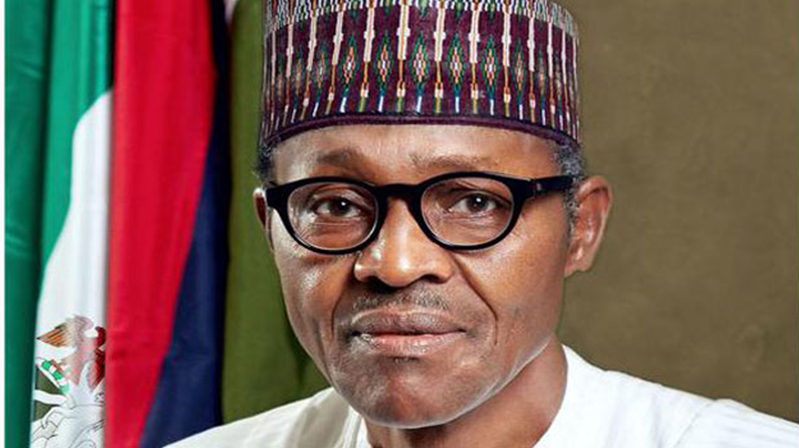
Former President Buhari dies in London
Former Nigerian President Muhammadu Buhari, who was also a military general and campaigned on the promise of eliminating government corruption, has passed away at the age of 82, as stated by the presidential press office on Sunday. He died in London around 4:30 p.m. following a “prolonged illness,” according to the announcement.
Buhari’s death was confirmed in a terse statement by his former special adviser, Garba Shehu, on Sunday evening. “The family of the former president has announced the passing on of the former president, Muhammadu Buhari, GCFR, this afternoon in a clinic in London,” he said. However, the nature of the illness was not disclosed. The former president had been in London for the last couple of days undergoing treatment before his death on Sunday.
Bola Ahmed Tinubu, the current president of Nigeria, expressed his condolences to Buhari’s wife and instructed his vice president to travel to the UK to assist in bringing Buhari’s remains back to Nigeria.
Tinubu praised Buhari’s legacy, referring to him as “a patriot, a soldier, a statesman” who had a “deep commitment to the unity and progress” of Nigeria.
“He remained steadfast during the most challenging times, leading with quiet strength, profound integrity, and an unwavering belief in Nigeria’s potential. He advocated for discipline in public service, tackled corruption directly, and consistently prioritized the nation over personal interests,” Tinubu remarked.
Buhari was elected as president in 2015 after three unsuccessful attempts. He was re-elected for an additional four-year term in 2019. A former general who initially seized power in a military coup in 1983, only to be ousted by another coup two years later, Buhari will be remembered for his robust anti-corruption initiatives in a nation famously labeled as “fantastically corrupt” by former British Prime Minister David Cameron. Others commend his firm approach towards the Boko Haram insurgency and the security challenges that have afflicted the northeast region of the country for many years.
A Fulani Muslim, he was born in Daura, Katsina State in Nigeria’s northern region in December 1942 and completed his military training in Kaduna State, Great Britain, India, and the United States.
He first gained political prominence in 1975 following a military coup that deposed then-ruler Yakubu Gowon. Buhari was appointed as the military governor of Borno State – a region troubled by Boko Haram.
Buhari, who has been married twice and has ten children, was part of Nigeria’s ruling elite both as a military leader and later as a “reformed democrat,” a term he used to describe himself during the 2015 election campaign, which he won decisively.
Nigerians filled the streets to celebrate his victory; however, the initial euphoria was short-lived as many felt he wasted his goodwill by being overly slow in his presidential initiatives.
He took six months to appoint ministers to his cabinet and subsequently failed to respond swiftly to the nation’s economic crises, which were partly caused by a weak currency and declining global oil prices.
For several months, Buhari resisted devaluing Nigeria’s depreciating currency, the naira, which undermined investor confidence. This further exacerbated the disparity between the official and black market exchange rates.
Economic analyst Bismarck Rewane noted that one of Buhari’s shortcomings was his limited grasp of contemporary economics and market policies, which led the country into recession. This lack of comprehension stemmed from paranoia and distrust following his ousting during his initial military rule, according to Rewane.
He stated: “In 1983, Buhari believed he was deceived when the IMF requested him to devalue the Naira and eliminate subsidies. Three weeks later, a coup was staged against him. Since that time, he has harbored skepticism towards free market policies and has taken considerable time to implement changes. When he eventually did act, the results were insufficient and came too late to be effective.”
Rewane, who interacted with President Buhari multiple times during the campaign and provided him with policy recommendations following his electoral success, asserts that Buhari will be remembered as a “strong and principled leader.”
“He was an exceptionally unique governor,” Rewane remarked to CNN. “Some may argue that he was inflexible, unwilling to change his stance when he was convinced of something. However, I view that as a positive trait. His strength of character is quite rare in this region of the world. Individuals here tend to be overly adaptable and corrupt.”
Buhari’s initial term was marked by conflicts on various fronts, including the Boko Haram insurgency, the pro-Biafra secessionist movement in eastern Nigeria, and the rampant activities of Fulani herdsmen throughout the country.
Despite escalating worries regarding the nation’s security landscape, Buhari was reelected in 2019. Throughout his second term, intense protests against police brutality erupted nationwide, condemning reported cases of kidnapping, harassment, and extortion by a controversial police unit.
Buhari pledged to intensify efforts to combat militant groups and address economic issues as the protests turned violent and continued to simmer for the duration of his presidency.
In his final address to the UN in 2022, Buhari denounced the “corrosive” influence of fellow leaders who extend term limits to maintain power. The following year, he commended his successor and party colleague Tinubu as “the best person for the job.”