
Why American Capitalism Appears to Stand While Others Falter: The Power of Extraction, the Dollar and Economic Warfare – Chimaobi James Agwu
American capitalism has demonstrated a remarkable capacity to survive financial crises, geopolitical upheavals and mounting public debt while continuing to attract investment from around the world. Yet its resilience raises an important question: does the United States stand economically because its capitalist system is inherently stronger, or does its position in the global economy allow it to transfer some of the costs of its prosperity to other countries?
The question becomes particularly important when examining the relationship between American financial power, international trade, resource extraction, economic sanctions and the vulnerability of developing economies.
The argument that the United States sustains capitalism by taking wealth from other countries deserves serious examination. Although describing the entire system as theft would oversimplify a complex economic relationship, there is substantial evidence that the global financial order gives the United States distinctive advantages and enables its government and corporations to exercise considerable power over other economies.
Understanding these advantages requires looking beyond domestic productivity and examining how the international economic system distributes opportunities, risks and rewards.
The dollar: America’s most powerful economic advantage
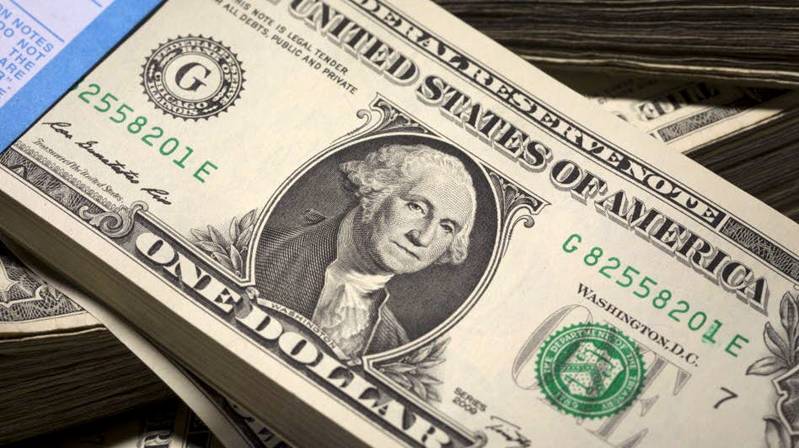
The foundation of American financial influence is the international dominance of the US dollar.
According to the International Monetary Fund’s Currency Composition of Official Foreign Exchange Reserves (COFER) data, the dollar accounted for approximately 57.13 per cent of global official foreign-exchange reserves in the first quarter of 2026. The euro represented a considerably smaller share, while China’s renminbi remained far behind.
This dominance is not accidental. The United States has a large economy, deep financial markets, an extensive supply of Treasury securities and a financial infrastructure that international investors use to conduct transactions, preserve liquidity and manage risk.
However, the dollar’s global position also confers substantial benefits on the American economy.
Countries, central banks and companies need dollars to pay for imports, service dollar-denominated debts, trade commodities and maintain international reserves. This creates sustained demand for American financial assets, including government bonds.
The United States can consequently attract capital from abroad on a scale few countries can match. Foreign investors help finance American borrowing, while American businesses and financial institutions gain access to international investment opportunities.
The Federal Reserve Bank of St. Louis has explained that global demand for dollar-denominated assets can reduce American government borrowing costs and make international transactions easier for US companies.
This is a structural privilege. Other countries must often earn or borrow foreign currency to finance essential imports, whereas the United States issues the currency that much of the world already uses.
The arrangement does not mean that America can borrow without consequences. Inflation, interest rates, fiscal deficits and investor confidence still impose constraints. Nevertheless, the dollar gives the United States an unusually favourable position in global finance.
The extraction of wealth from weaker economies
The second source of American economic advantage lies in the structure of international production. American multinational corporations operate across continents, sourcing minerals, agricultural commodities, labour and manufactured components from countries with widely differing levels of bargaining power.
Foreign investment can create employment, transfer technology and expand productive capacity. The problem arises when host countries receive a disproportionately small share of the value generated from their resources, while profits, intellectual property income and financial returns accrue to investors and corporate headquarters abroad.
The United Nations Conference on Trade and Development (UNCTAD), in its Trade and Development Report 2024, examined how financialisation and global value chains affect developing economies. It highlighted the limited share of final consumer value retained by many small producers, noting that coffee farmers can receive as little as 3 per cent of the final selling price. The report also described the concentration of global food trading among a relatively small number of companies.
This illustrates a broader problem: the country supplying a commodity does not necessarily capture most of its final value.
Consider a mineral-rich African country exporting unprocessed minerals. If the country lacks reliable electricity, advanced processing facilities, affordable finance and technological capacity, it may export raw materials cheaply and subsequently import finished products at much higher prices. Foreign companies with processing technology, global distribution networks and access to capital can capture much of the additional value.
American businesses are not the only beneficiaries of this arrangement. European, Chinese and other international corporations also participate. Nevertheless, American companies enjoy advantages derived from the size of the US market, the global reach of their financial institutions and the dollar’s central position in international commerce.
The resulting system can resemble economic extraction without requiring the formal occupation of another country. Wealth moves through contracts, commodity prices, royalties, dividends, interest payments and ownership rights.
The important distinction is between mutually beneficial investment and an arrangement in which the distribution of benefits systematically favours the owners of capital over resource-producing communities.
Tax avoidance and the movement of profits
Another mechanism through which poorer countries can lose economic resources is multinational profit shifting.
Companies operating across several jurisdictions may arrange their intellectual property ownership, intra-company loans, licensing fees and other transactions to record profits in lower-tax jurisdictions. Some arrangements are legal under existing rules; others involve unlawful evasion or abusive practices. The economic consequences can include reduced tax revenue in the countries where production and sales occur.
The Tax Justice Network’s State of Tax Justice 2024 estimated that countries worldwide lose approximately US$492 billion annually to international tax abuse involving multinational corporations and wealthy individuals. Its analysis attributed US$347.6 billion of the estimated annual losses to multinational corporate profit shifting. These are the organisation’s estimates, rather than a universally accepted official accounting of losses.
Tax Justice Network
Research published by UNU-WIDER similarly estimated that global profit shifting reached approximately US$969 billion in 2019 and disproportionately damaged developing countries, which generally have less administrative capacity to police complex international tax arrangements.
The implications are significant. A government deprived of corporate tax revenue has fewer resources for schools, hospitals, electricity, roads and industrial development. It may then borrow to finance public expenditure, sometimes at substantially higher interest rates than those available to wealthier economies.
Meanwhile, multinational shareholders can continue receiving dividends and capital gains. This does not mean that every American multinational engages in abusive tax practices or that all overseas corporate profits represent stolen wealth. It does demonstrate how global corporate structures can facilitate transfers of economic value while weakening the public finances of countries where business activity takes place.
Economic warfare: sanctions, tariffs and financial Pressure
American economic power also rests on the government’s ability to restrict other countries’ access to markets, technology and international finance.
The dollar’s dominance gives Washington considerable influence over cross-border payments. Because international transactions frequently pass through dollar-clearing networks and institutions exposed to US jurisdiction, American authorities can use sanctions to freeze assets, restrict transactions and deny designated governments, companies or individuals access to parts of the international financial system.
In his book Bucking the Buck, political economist Daniel McDowell examines how the United States has used this financial leverage and how the prospect of sanctions can create political risks for countries dependent on dollar-based finance.
Sanctions can serve legitimate objectives, including responding to aggression, nuclear proliferation and other security threats. However, they can also impose substantial costs on ordinary citizens, disrupt trade and limit access to finance. Their effects depend on their design, enforcement, duration and the availability of alternative trading partners.
Tariffs provide another instrument of economic pressure. By raising the cost of imported goods, the US government can seek to protect domestic producers, encourage companies to manufacture within the United States or pressure trading partners into negotiations.
An IMF working paper published in July 2025 examined responses to US tariffs, including retaliatory duties, subsidies and efforts by affected countries to establish alternative trade agreements. It found that retaliation can hurt US exports while generating broader trade distortions, and that subsidies can be expensive for the countries implementing them.
The asymmetry is important. A smaller economy that depends heavily on access to American consumers may suffer disproportionately when that access becomes more expensive or restricted. The United States, with its enormous domestic market and access to capital, may have greater capacity to absorb the initial shock. Yet economic warfare can also backfire. Tariffs raise costs for American importers and consumers, while extensive sanctions may encourage other countries to develop alternative payment systems and reduce their dependence on the dollar.
Debt, conditionality and constrained development
The international debt system presents another difficulty for countries seeking to build independent industrial capacity. When governments face balance-of-payments crises, they may turn to the International Monetary Fund for financial assistance. IMF programmes can restore access to financing and stabilise economies, but loans often come with policy conditions involving public spending, taxation, exchange rates and structural reforms.
A peer-reviewed study examining 135 countries between 1980 and 2014 found that certain IMF conditionality measures were associated with higher income inequality in borrowing countries. The researchers identified fiscal restraint, trade and capital-account liberalisation, financial-sector reforms and restrictions relating to external debt among the policy areas associated with adverse distributional effects.
Such findings do not establish that every IMF programme is harmful, nor that the United States alone determines IMF policy. The Fund has a multilateral membership, and governments sometimes seek its assistance because their economies already face severe financial distress.
Nevertheless, the broader question remains: can countries achieve lasting development when debt servicing, currency pressures and restrictive financing conditions leave them with limited resources to invest in manufacturing, technology and infrastructure?
For resource-dependent economies, repeated cycles of borrowing, austerity and renewed borrowing can make economic independence difficult to achieve.
Why American capitalism is not invulnerable
Despite these structural advantages, the United States does not stand outside the pressures affecting other capitalist economies.
Its resilience also reflects domestic factors: a large consumer market, leading universities, technological innovation, energy production, deep capital markets, a skilled workforce and the ability to attract entrepreneurs and investment from around the world.
The dollar’s dominance is reinforced by these strengths, not merely by geopolitical coercion.
The IMF’s 2026 assessment of the US economy nevertheless identified important vulnerabilities. The Fund projected a continuing current-account deficit of around 3.5 to 4 per cent of GDP in coming years and warned that rising external imbalances and shifts in investor preferences could expose the economy to financial instability.
American capitalism therefore faces real constraints, including public debt, inequality, housing costs, industrial dislocation and the risk that investors may eventually become less willing to finance US borrowing on favourable terms. Nor are other economies necessarily collapsing. UNCTAD’s 2025 investment analysis reported contrasting regional outcomes: global productive investment flows weakened, but some developing economies attracted substantial inflows. In Africa, reported foreign direct investment rose sharply in 2024, although a single major project in Egypt accounted for much of the increase.
The comparison is therefore not between a permanently successful America and a uniformly failing rest of the world. It is between economies occupying different positions within an unequal international system.
Conclusion: Capitalism’s unequal playing field
American capitalism appears resilient partly because the United States occupies an exceptional position in the global financial, commercial and geopolitical order.
The dollar allows America to attract international capital and borrow in its own currency. Its multinational corporations can access global resources and markets. Its government can use tariffs and financial sanctions to influence other countries’ economic choices. Meanwhile, weaknesses in international taxation, unequal bargaining power and debt dependence can limit the capacity of poorer countries to retain and reinvest the wealth they generate.
These mechanisms support the argument that American prosperity is partly sustained by an international system whose benefits and burdens are unevenly distributed. They do not, however, prove that America’s entire economic success depends on stealing from other countries. The more defensible conclusion is that American capitalism combines genuine productive strengths with structural privileges that allow the United States to capture benefits and distribute some costs beyond its borders.
For developing countries, the challenge is not simply to condemn American power. It is to negotiate better resource agreements, process commodities locally, strengthen tax administration, diversify exports, develop domestic financial markets and cooperate regionally to improve bargaining power.
Ultimately, economic sovereignty means more than possessing natural resources or political independence. It means having the capacity to transform national wealth into productive investment, decent employment and lasting prosperity for the people who generate it.
Article by: Chimaobi James Agwu. Agwu is an economist, researcher and National Director of BNI Nigeria. He is an author and a poet and consults for multinational and bilateral development agencies on economic development and project implementation.